
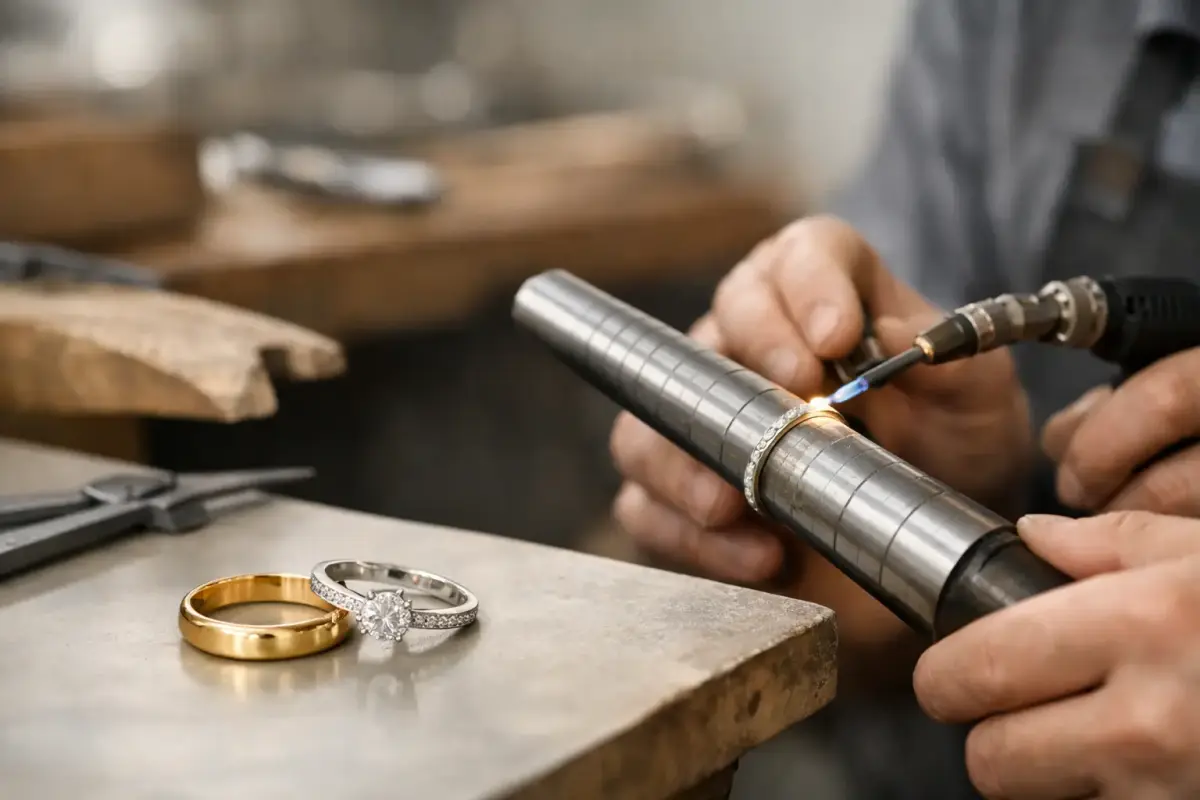
A setting can look low in a photograph because it was shot from above. Put the ring on and the head may stand much farther off the hand than expected. The height affects how often it meets a sleeve, how much of the stone is visible from the side and what sort of wedding band can sit beneath it. For a gift, those details are best judged against the wearer’s real routine.
When choosing an engagement ring for your partner, try to learn which sensations they enjoy and which they avoid. Someone who pulls gloves on repeatedly might notice every extra millimetre. Someone who loves seeing the side of a diamond may happily choose a taller head.
Use their routine to judge a low setting
Think about the clothes and equipment they use most often. A ring that sits close to the finger can be easier to slip under a cuff. Its feel also depends on the outer shape, the presence of claws and how far the head reaches towards the next fingers. Ask for a low sample in the intended stone size, since a deeper stone can limit how close it sits.
Try the low design with a straight wedding band. It may leave a gap because the head reaches the other ring before the bands meet. Some wearers like that space. If your partner prefers a close fit, look at a curved band or compare a slightly higher mount. Decide which issue matters more for their normal use.
Understand what a higher setting can offer
A raised basket can show more of the stone from the side and may give a straight band room underneath. It can also make a smaller stone feel more noticeable when viewed at an angle. Look from the side and compare actual heights. A setting described as high in one design may be only a little taller than the low version of another.
Run a sleeve past the sample and check the finish of the claws and shoulders. A taller head may be perfectly manageable for someone who wears rings regularly. If your partner avoids anything that catches or moves, give extra weight to the way the ring feels during simple tasks. Height alone cannot predict every point of contact.
Use a clear comparison if you are keeping the proposal secret
Look at rings your partner already wears, or ask about the details they enjoy in a piece they recently noticed. Useful clues include whether they turn a ring inwards under sleeves and whether they prefer their bands close together. Avoid treating a photo saved for its stone as proof that they like the mount.
Ask the jeweller about the options if the profile needs to change after the proposal. A resize is a different job from rebuilding a head. Some shops offer a temporary ring, or you can leave the final mount choice open. A short comparison on the hand can be worthwhile if the height is the one preference you cannot establish in advance.
Final Thought
Choose the setting height around the wearer’s most frequent movements and the band they may add later. A side view and a try-on give you clearer evidence than a product photograph, especially if you want the ring to feel easy from the first day.